Best Observation Decks in Tokyo: Ranked for Every Trip
See prices From 80 EUR · Free cancellation available
Contents
The best observation decks in Tokyo are not one deck but five different answers to five different goals. Some are open-air, some are very high, one is free and one is a famous red and white icon. Here is the plain version of my ranking: I’d put Shibuya Sky first for most trips, Tokyo Skytree first for pure height, and a free deck first for budgets. This guide ranks each option by what you want from the view and links to a full head-to-head for every pairing. For the deck I know best on this site, you can start from the Shibuya Sky homepage, then come back to compare.
What Is the Best Observation Deck in Tokyo?
There is no single best deck, because a good view depends on your goal. For open-air, sunset and the crossing below, I’d pick Shibuya Sky. For height, pick Skytree. For free, pick the Metropolitan Government Building. For a classic icon, pick Tokyo Tower.
That may sound like a hedge, but it is really the most honest answer. A traveler who wants a free skyline glance and a traveler who wants a once-only sunset are shopping for different things. So I rank by goal, not by fame, and I commit to a pick in each row. If you disagree with one of them, good, that means you know what you want.
Check prices & dates
Ready to visit?
Book your tickets in advance: popular time slots sell out.
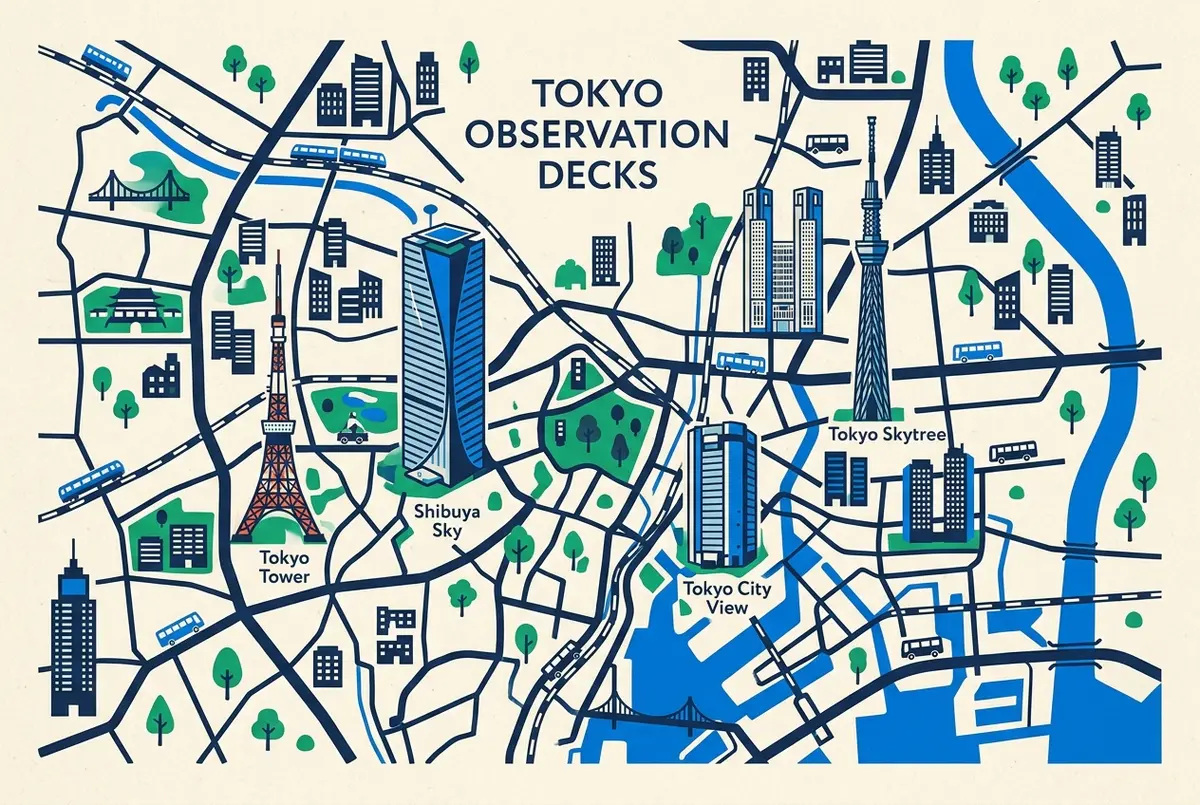
Here is my ranking by goal. Figures are approximate and well known, and prices are left as “check official” because they vary by date, ticket and slot.
Your goal
My pick
Why
Open-air view and sunset
Shibuya Sky
Open stage, no glass, crossing below
Maximum height
Tokyo Skytree
Far higher than any other deck
Free entry
Metropolitan Government Building
Free public floor in Shinjuku
Classic landmark experience
Tokyo Tower
Historic icon, enclosed decks
Calm, polished skyline
Tokyo City View, Roppongi
Enclosed glass, wide angle
First trip, one deck only
Shibuya Sky
Fits the classic west-side route
I’ve kept this table short on purpose. The details behind each row are on the comparison pages linked below, and I would rather point you to them than crowd this page with numbers that go stale.
Which Deck Is Best for Open-Air Views and Sunset?
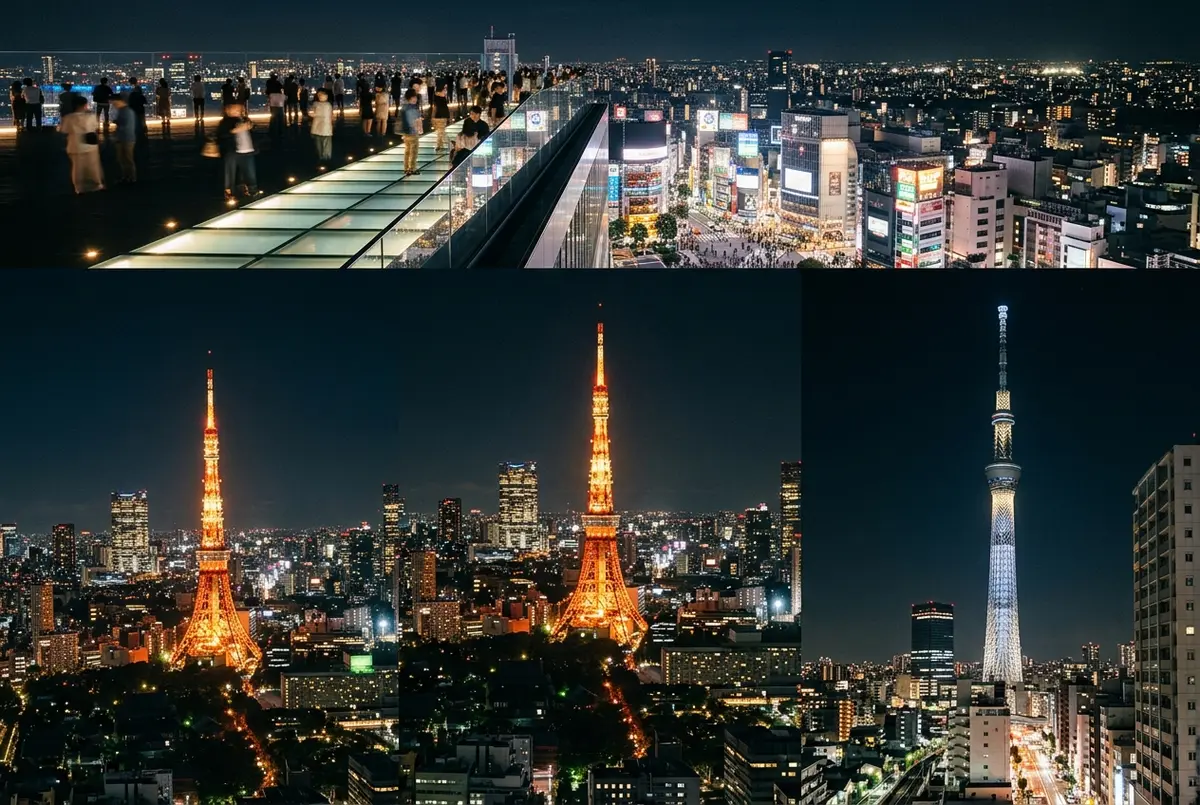
Shibuya Sky is my pick for open-air views and sunset. You stand on a rooftop stage about 229 meters up, with no glass between you and the city, and you watch the light change before the crossing lights up below you.
The reason I rank it first here is simple. Open air changes the feeling of the whole visit. Wind, sound and the sense of standing at the edge of the city make it more memorable than a sealed floor. The trade-off is weather, since a windy or wet evening is less pleasant, and sunset slots sell out first. I explain the booking tactics in how to get a Shibuya Sky sunset slot.
Which Deck Is Best for Pure Height?
Tokyo Skytree is the best for height. The tower is about 634 meters tall, with decks at roughly 350 and 450 meters, far above any other deck in this list.
I would send anyone who wants the widest possible panorama, and the best chance of a huge Mt. Fuji horizon on a clear day, to Skytree. The trade-off is that it sits in the east of the city, so it is a detour if you are staying west. I compare the two decks in the pillar guide, Shibuya Sky vs Tokyo Skytree, and the ticket side is in Tokyo Skytree tickets and observation deck price.
Which Deck Is Best if You Want It Free?
The Tokyo Metropolitan Government Building in Shinjuku is the best free option. It has a public observation floor with no admission fee, enclosed behind glass, with a wide view of the city.
Free is a real advantage, and I would never look down on choosing it. It is enough for a quick skyline look, especially on a budget or in poor weather. If sunset, photos or the open air matter, I’d pay for a deck instead. The full trade-off is in Shibuya Sky vs Tokyo Metropolitan Government Building, and please check the official page for current hours and closure days.
Which Deck Is Best for the Classic Tokyo Icon?
Tokyo Tower is the best for the classic icon. It is the older red and white tower in Minato, and standing on its decks is a piece of Tokyo history in its own right.
Here is my honest ranking logic. The tower is a landmark you look at, and it is also visible from other decks, including Shibuya Sky on a clear evening. If the icon itself is your goal, go inside it. If you want the icon in your photos, pick a deck that can see it. I go through that in Shibuya Sky vs Tokyo Tower, and the ticket options are in Tokyo Tower observation deck tickets.
Which Deck Is Best for a Calm Skyline?
Tokyo City View in Roppongi is my pick for a calmer, more polished skyline. It is a glass-enclosed deck on the top floors of the Mori Tower, with a wide central view and a quieter mood than the busiest decks.
It is a good second deck for someone who has already seen the crossing, or a good first deck for someone who wants a relaxed, sheltered evening. I would not choose it for the open air. For the full angle and mood comparison, read Shibuya Sky vs Tokyo City View Roppongi.
Which Deck Is Best for a First Trip to Tokyo?
For a first trip, I’d choose Shibuya Sky. It sits on the classic west-side route near Harajuku, Shinjuku and the crossing, so it slots into a day of sightseeing without a long detour.
Location matters more than people expect. If you are staying in the west or center, a deck in the east means a long rail ride each way. If you are staying in the east, Skytree becomes the easy add-on. Look at your hotel and your route before you pick by fame alone. I’d never tell a first-timer to skip Skytree, only to rank it by how well it fits the trip.
Which Deck Is Best for Photos?
For photos, I’d choose Shibuya Sky, because the open-air stage removes glass glare and gives you the crossing, the skyline and often Tokyo Tower in one frame. Enclosed decks are fine for snapshots but can add reflections, especially at night.
Whatever you choose, go at the right time. A sunset slot gives you the best mix of light, and clear days help with distance. My guide to Shibuya Sky photos covers where to stand and how to handle wind and glare. I’d also bring a wrist loop for your phone, since wind is a real thing on an open deck.
Which Deck Is Best for Families and Bad Weather?
An enclosed deck is easier for small children and in poor weather. The Metropolitan Government Building, Tokyo Tower and Roppongi are all sheltered, and Skytree’s decks are enclosed too.
Shibuya Sky is great for kids who enjoy the open air, but wind and height can worry a nervous child. My advice is to match the deck to the child and the forecast. For age rules and stroller tips at the Shibuya deck, see Shibuya Sky with kids.
How Do Prices and Tickets Compare?
Prices vary by deck, date, slot and age, so I would not quote a number from memory. The free deck costs nothing. The paid decks charge for admission, and some offer different levels or time bands. Always compare on the official pages for your date.
If you would like an idea of what a guided Shibuya Sky package costs, the Shibuya Sky sunset or night walking tour starts from EUR 80 per person as of 2026-09-21 and may vary by date, group size and season. Food, drinks and transport to the meeting point are typically not included, so check the listing before you book.
How Many Decks Should You Visit?
Usually one or two. Views are similar in kind, and three or four decks in a short trip can feel repetitive. I’d pick one main deck that matches your goal, and add a second only if it is convenient or offers something different, such as a free deck or a very tall one.
For most travelers my pair would be Shibuya Sky for the open air and either Skytree for height or the free deck for value. If you can only do one, I’d go with Shibuya Sky. Book a sunset or early night slot, keep your date flexible, and check current prices on the Shibuya Sky tickets page.
Common Mistakes When Choosing a Deck
The biggest mistakes are choosing by fame alone, judging only on height, forgetting travel time between districts and booking a sunset slot without checking the real sunset time for your date. Another is expecting a guaranteed view, since every deck depends on the weather.
I’d add one more: assuming Tokyo Tower and Tokyo Skytree are the same thing. They are two different towers in two different parts of the city. Give yourself a spare day if you can, and read the terms on your booking. For the official details on the deck I recommend most, the Shibuya Scramble Square Sky page is the source to check.
My Recommendation
Pick Shibuya Sky if you want an open-air rooftop, a sunset with the crossing below you and an easy fit with a classic Tokyo route. Pick Skytree if height is everything, a free deck if budget is everything and Tokyo Tower if the icon itself is your goal. If you only have time for one, I’d take Shibuya Sky.
It depends on your goal. Shibuya Sky is best for open-air views and sunset, Skytree for height, the Metropolitan Government Building for free entry and Tokyo Tower for the classic icon.
Which observation deck in Tokyo is free?
The Tokyo Metropolitan Government Building in Shinjuku has a free public observation floor. Check the official page for current hours, closure days and queue rules.
Which Tokyo observation deck is highest?
Tokyo Skytree is the highest, with decks at roughly 350 and 450 meters. Shibuya Sky is about 229 meters.
Which deck is best at sunset?
I’d pick Shibuya Sky for sunset, because the open-air stage gives you an unobstructed view as the city lights come on. Book a sunset slot early.
Do I need tickets for Tokyo observation decks?
Most paid decks use tickets, and some use timed slots that can sell out. The Metropolitan Government Building has no admission ticket for its public floor. Always check the official page for your date.