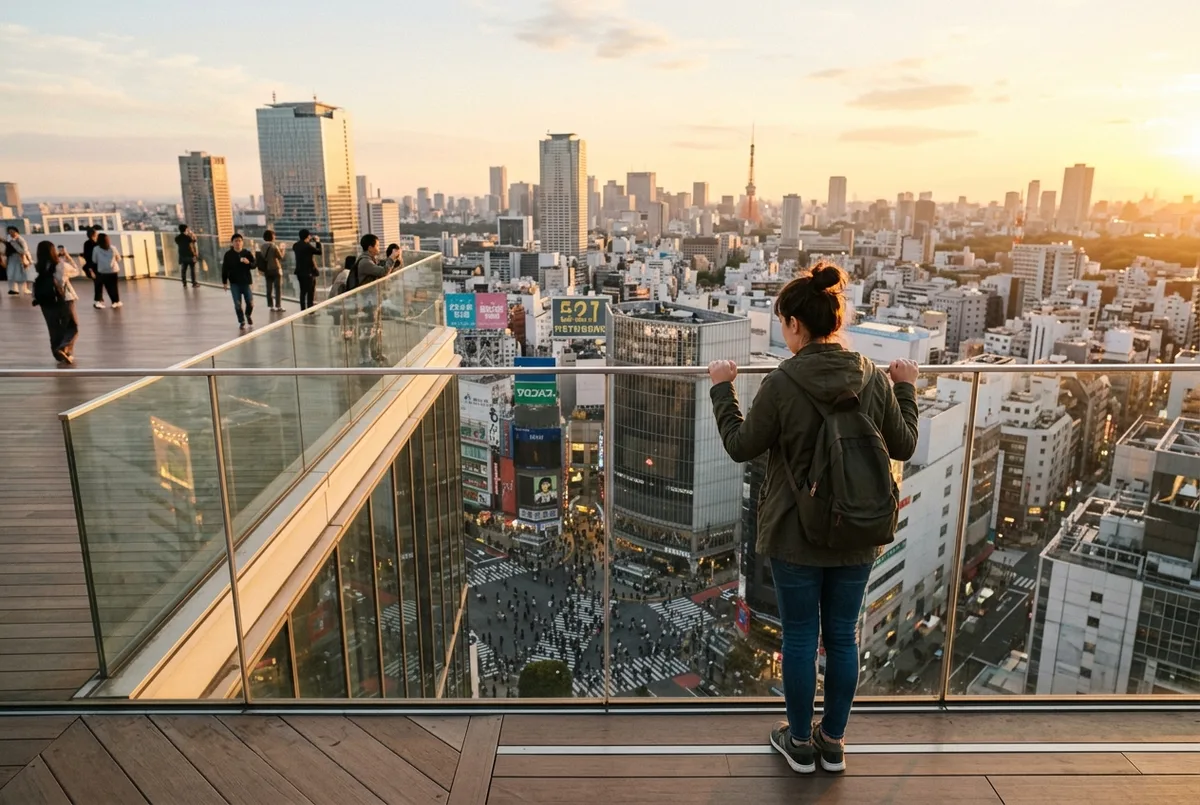
Shibuya Sky height is about 229 meters above street level, measured to the open-air rooftop of the Shibuya Scramble Square tower, which has roughly 47 floors. Here is how I’d read that number: it is high enough to feel dramatic and low enough that the crossing below still looks like something you can follow with your eyes. That is a different kind of view from the tallest towers in Tokyo, and it is the reason many visitors prefer it. This page puts the height in context, explains how the floors stack up, and tells you what you can actually see at that altitude. For the full overview of the attraction, start with the Shibuya Sky observation deck guide, and if you are still deciding whether to go, see Shibuya Sky Tokyo for tickets and tours.
How High Is Shibuya Sky?
The deck sits about 229 meters above the ground. The tour listings we reviewed quote that figure for the open-air rooftop, and it is the number most visitors see repeated. The tower itself is a little taller than the deck level, and the total is usually given as around 230 meters.
I’d treat 229 as a solid working number rather than a survey result. Operators sometimes round, and official pages are the place to confirm anything you plan to quote. The tower is described as having about 47 floors above ground, but I would not build a trip around a floor count, because floor numbers change with how the building labels its levels. If you want a source you can cite, the Shibuya Scramble Square entry on Wikipedia lists the building’s dimensions, and the operator’s own page is the final word.
How Many Floors Does the Shibuya Sky Visit Use?
A visit uses a small group of levels near the top of the building. You enter lower in the complex, ride up to an indoor gallery level, and finish on the open-air rooftop. The building has dozens of floors in total, but only a few belong to the deck.
The part that matters for your planning is the sequence, not the numbers. I would not memorize any shibuya sky floor figure, because I cannot verify current signage, and a wrong number helps nobody. What I’d do instead is learn the order: entrance and check-in, a lift, the indoor gallery, then the escalator and the sky stage. Our page on what to expect at Shibuya Sky walks through that order step by step.
Which Level Is the Open-Air Rooftop?
The rooftop is the top of the visit and the highest place you can stand. It is the open-air sky stage, with no glass between you and the skyline apart from safety panels around the edge. That is the 229 meter level people quote.
There is also an indoor level below it, where you look out through glass. That gives you a slightly lower vantage and a sheltered place to get your bearings. My advice is to go to the rooftop first, because the light and the crowds change fast, and then use the indoor level as your rest stop. Do not judge the height from behind glass. The open-air level is where the number feels real.
Is Shibuya Sky One of the Tallest Decks in Tokyo?
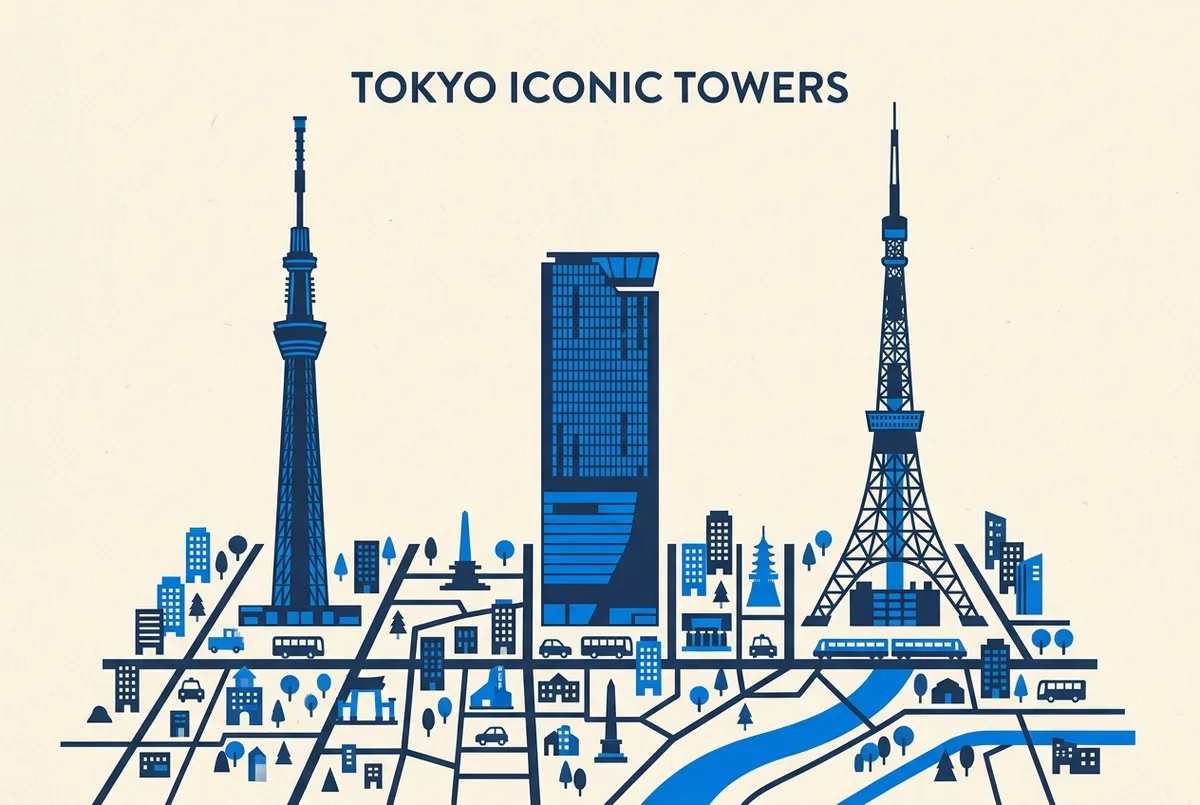
No, it is not the tallest, and that is fine. Tokyo Skytree, in the east of the city, rises to 634 meters and has observation levels far higher than Shibuya Sky. Tokyo Tower is 333 meters tall, with a main deck lower than the Shibuya rooftop and a top deck that is higher.
The shibuya sky vs tokyo skytree height comparison is one people love to make, but I’d argue it is the wrong question. Skytree wins on raw altitude, while Shibuya Sky wins on how close you are to the action. From 229 meters you can pick out individual people at the crossing, while from several hundred meters the crowd becomes a texture. If you want the full head-to-head, our Shibuya Sky vs Tokyo Skytree guide compares height, view type, crowds and price, and it also clears up the name confusion, because they are two different places in two different parts of Tokyo.
Why Does Height Matter Less Than the View Type?
Height changes the view less than most people expect. What changes the view is whether you are outside, whether the angle is close to street level and whether the surroundings are interesting. Shibuya Sky is open air, sits in the middle of a dense district and looks straight down on the world’s busiest pedestrian crossing.
I’d choose a lower open-air deck over a higher glass-walled one for photos almost every time. Glass adds reflections, and open air removes them. The trade is wind, which is real at this height. That is one of several reasons I’d recommend a light jacket even in summer.
What Can You See From 229 Meters?
On a clear day you can see the Scramble Crossing directly below, the skyline of Shinjuku, Tokyo Tower and, in the best conditions, Mt. Fuji far to the west. The tour listings also mention Tokyo Skytree on the horizon. What you see depends on air quality and the time of day.
At this altitude the crossing is the star. You look almost straight down, so the pedestrian flow reads like a pattern of ants, and the traffic lights make it pulse. I’d spend your first few minutes just watching that, before you take any photos. Then turn slowly, find the skyline landmarks and pick one direction to shoot. You can read more about the far view in our page on the Shibuya Sky Mt Fuji view, which covers season, time of day and realistic odds.
Can You See Mt. Fuji From Shibuya Sky?
Sometimes. Mt. Fuji is about 100 kilometers away, and it only shows on clear days, more often in the cooler months and in the morning or late afternoon. It is never guaranteed, and I’d never book a slot with Fuji as the only goal.
Here is my honest rule. Treat Fuji as a bonus, and make the skyline and the crossing the reason you go. If you want to raise your odds, choose a flexible date and a slot when the air is cleaner. The tour that includes a morning slot, the Shibuya Sky morning tour with ticket, is built around that clearer morning air, and prices start from EUR 75 per person as of 2026-09-21 and may vary by date.
Is the Shibuya Scramble Square Observation Deck Safe at This Height?
Yes, the deck is built for public visitors and has glass safety panels and staff. The wind is the main thing you will notice. If you dislike heights, the indoor gallery gives a gentler view, and you can step outside for as long as you feel comfortable.
Anything loose is a risk at 229 meters, so bags, hats and phones need care. I’d zip your pockets and use a wrist strap for your phone. Rules on what you can carry change, and the operator’s page is the reference. Our page on Shibuya Sky lockers, bags and rules is worth a quick look before you go.
Does Height Change the Best Time to Go?
A little. At sunset the sun drops into the haze on the western horizon, and at night the lights of the city stretch out below you. Because you are not extremely high, you still see detail at street level in the evening, which is part of the charm.
I’d pick sunset if you can only choose one slot, because you see daylight, golden hour and the city lights come on in a single visit. That is the slot that sells out first, so plan ahead. The planning side is covered in best time to visit Shibuya Sky.
Is the Height Worth the Ticket Price?
For most first-time visitors I’d say yes, but only if you value the open-air view and the crossing. If you only want the tallest number in the city, Skytree wins. If you want the most atmospheric view of Tokyo, this deck is my pick.
That is a judgement call and I’d rather be clear about it than hedge. I’d give the height a solid B: it is not a record, but it is the right height for the view. If you want a longer verdict that weighs price, crowds and alternatives, read is Shibuya Sky worth it.
How Do You Get Up to the Deck?
You go through the Shibuya Scramble Square complex, which connects to Shibuya Station, check in for your timed slot and ride up. The lift takes you high quickly, so give yourself time before entry rather than rushing.
The building is easy to reach but the station is a maze, so I’d read the directions once before you leave your hotel. The route is set out in how to get to Shibuya Sky, and I would follow it rather than trusting a map app inside the station.
What Should You Take Away About Shibuya Sky Height?
The number to remember is about 229 meters. That is high enough to see across Tokyo and low enough to feel the crowd. It is not the tallest deck, and that is part of why I like it.
Here is a quick summary in a table, all approximate and worth checking on the official page:
| Landmark | Approximate height | Why it matters |
|---|
| Shibuya Sky rooftop | about 229 m | Open air, close to the crossing |
| Tokyo Tower | about 333 m tower | Classic, visible in your view |
| Tokyo Skytree | about 634 m tower | Tallest, far east of Shibuya |
My Recommendation
Do not choose Shibuya Sky for its height alone. Choose it because it puts you at an altitude where the city still has faces. I’d book a timed slot for sunset or shortly after, arrive early, go straight to the open-air stage and keep a layer in your bag. If you want a guide and admission in one booking, the morning tour above is the compact option I’d pick for a first visit, and if you know Shibuya already, a plain timed ticket does the job. Either way, confirm the current height, hours and rules on the official Shibuya Scramble Square Sky page before you go.
Shibuya Sky Height FAQ
How high is Shibuya Sky?
About 229 meters above the city at the open-air rooftop, in a tower of roughly 47 floors. Check the official page for exact figures.
Is Shibuya Sky taller than Tokyo Tower?
No. Tokyo Tower is about 333 meters tall, though its main deck sits lower than the Shibuya Sky rooftop. Skytree is taller still.
Is Shibuya Sky the same as Tokyo Skytree?
No. They are different places. Shibuya Sky is in Shibuya Scramble Square, and Tokyo Skytree is a broadcasting tower in the east of the city.
Can you see Mt. Fuji from Shibuya Sky?
On clear days, mostly in cooler months and mornings. It is never guaranteed, so treat it as a bonus.
Which floor is the Shibuya Sky rooftop?
It is the top level of the visit, the open-air sky stage. Floor labels can change, so follow the signs and the official map.